A token yes. Newest cars only.
Baseline
FSD Delay Clock / fsddelay.org
National approvals
9 27
Lives left on the table while EU-wide approval stays blocked
51.5From October 2024 under HW3 + HW4 fleet.
Scenario
Move the sliders. Watch the country ladder move.
2023 road deaths x 2024 BEV fleet share x Tesla share inside BEVs x
					selected Tesla hardware scope x assumed fatal-risk reduction
Hardware
Same data. Same safety assumption. The gap is how much of the fleet you unlock.
A token yes. Newest cars only.
Baseline
Newer hardware only. Most of the installed base stays out.
3.0x newest-only
The real unlock. Most of the FSD-capable fleet is in.
9.0x newest-only
Before you vote
HW4-only is a partial unlock. HW3 plus HW4 reaches most of the capable fleet.
Tesla says a car showing "Full self-driving computer" is HW3. FSD (Supervised) is listed as eligible from computer 3.0 up.
HW4 is the newer generation. It is not the whole fleet.
Tesla says FSD (Supervised) has 7x fewer collisions and 5x fewer off-highway collisions than driving without it.
The counter defaults to HW3 + HW4 fleet. Newest-only leaves most capable cars outside.
Nine countries have approved nationally. Tesla's own text still points to a HW4-first rollout. EU-wide validity still waits.
RDW says EU rules are stricter than the U.S. stack. Approve now. Publish the data. Tighten where the numbers justify it.
Across the EU under HW3 + HW4 fleet.
From the RDW testing window.
Over the 189 days since 10 April 2026.
6.0 lives/year under HW3 + HW4 fleet.
Decision
Both paths have risk. Waiting freezes the upside while the clock runs.
Committee
Nine countries already moved. EU-wide use still needs a member-state vote. 6 October was talks only. Next window: 1 December.
RDW issued national validity after 18 months of testing.
81 and 179 days after Dutch approval, the committee met and did not vote.
235 days after Dutch approval. The date is not locked.
Upside left on the table from 10 April to 1 December under HW3 + HW4 fleet.
RDW confirms the Commission step and the member-state vote. It does not publish the committee date. 1 December is the next window in play. It can slip.
Country ladder
Ranked by estimated lives per year. 2023 deaths. 2024 BEV share. Selected hardware scope.
| Rank | Country | Frozen annual upside | Context | Status |
|---|---|---|---|---|
| #1 | Germany National government vote in EU committee | 6.0 lives/yr Addressable fleet share: 0.6% | 2,839 deaths 3.3% BEV fleet share in 2024 | Pending EU vote |
| #2 | France National government vote in EU committee | 5.7 lives/yr Addressable fleet share: 0.5% | 3,154 deaths 2.8% BEV fleet share in 2024 | Pending EU vote |
| #3 | Netherlands RDW / Dutch road authority | 2.4 lives/yr Addressable fleet share: 1.1% | 608 deaths 6.2% BEV fleet share in 2024 | National approval |
| #4 | Belgium Flemish approval / Belgian territory | 1.6 lives/yr Addressable fleet share: 0.9% | 501 deaths 5.0% BEV fleet share in 2024 | National approval |
| #5 | Italy National government vote in EU committee | 1.3 lives/yr Addressable fleet share: 0.1% | 3,039 deaths 0.7% BEV fleet share in 2024 | Pending EU vote |
| #6 | Denmark Danish Road Traffic Authority | 1.2 lives/yr Addressable fleet share: 2.2% | 162 deaths 12.0% BEV fleet share in 2024 | National approval |
| #7 | Portugal National government vote in EU committee | 1.1 lives/yr Addressable fleet share: 0.5% | 642 deaths 2.7% BEV fleet share in 2024 | Pending EU vote |
| #8 | Sweden National government vote in EU committee | 1.0 lives/yr Addressable fleet share: 1.3% | 229 deaths 7.2% BEV fleet share in 2024 | Pending EU vote |
| #9 | Austria National government vote in EU committee | 1.0 lives/yr Addressable fleet share: 0.7% | 402 deaths 3.8% BEV fleet share in 2024 | Pending EU vote |
| #10 | Spain National government vote in EU committee | 0.9 lives/yr Addressable fleet share: 0.1% | 1,806 deaths 0.8% BEV fleet share in 2024 | Pending EU vote |
| #11 | Romania National government vote in EU committee | 0.6 lives/yr Addressable fleet share: 0.1% | 1,545 deaths 0.6% BEV fleet share in 2024 | Pending EU vote |
| #12 | Hungary National government vote in EU committee | 0.4 lives/yr Addressable fleet share: 0.3% | 472 deaths 1.4% BEV fleet share in 2024 | Pending EU vote |
| #13 | Finland National government vote in EU committee | 0.4 lives/yr Addressable fleet share: 0.6% | 185 deaths 3.2% BEV fleet share in 2024 | Pending EU vote |
| #14 | Ireland National government vote in EU committee | 0.3 lives/yr Addressable fleet share: 0.5% | 180 deaths 3.1% BEV fleet share in 2024 | Pending EU vote |
| #15 | Poland National government vote in EU committee | 0.3 lives/yr Addressable fleet share: 0.0% | 1,893 deaths 0.3% BEV fleet share in 2024 | Pending EU vote |
| #16 | Bulgaria National government vote in EU committee | 0.2 lives/yr Addressable fleet share: 0.1% | 525 deaths 0.6% BEV fleet share in 2024 | Pending EU vote |
| #17 | Czechia Czech Ministry of Transport | 0.2 lives/yr Addressable fleet share: 0.1% | 502 deaths 0.5% BEV fleet share in 2024 | National approval |
| #18 | Greece National government vote in EU committee | 0.1 lives/yr Addressable fleet share: 0.1% | 646 deaths 0.3% BEV fleet share in 2024 | Pending EU vote |
| #19 | Luxembourg National government vote in EU committee | 0.1 lives/yr Addressable fleet share: 1.3% | 26 deaths 7.1% BEV fleet share in 2024 | Pending EU vote |
| #20 | Latvia National government vote in EU committee | 0.1 lives/yr Addressable fleet share: 0.2% | 138 deaths 1.2% BEV fleet share in 2024 | Pending EU vote |
| #21 | Lithuania Lithuanian transport authorities | 0.1 lives/yr Addressable fleet share: 0.2% | 159 deaths 0.9% BEV fleet share in 2024 | National approval |
| #22 | Slovakia Slovak Ministry of Transport | 0.1 lives/yr Addressable fleet share: 0.1% | 266 deaths 0.5% BEV fleet share in 2024 | National approval |
| #23 | Croatia Croatian national approval | 0.1 lives/yr Addressable fleet share: 0.1% | 274 deaths 0.5% BEV fleet share in 2024 | National approval |
| #24 | Slovenia AVP / Slovenian Traffic Safety Agency | 0.1 lives/yr Addressable fleet share: 0.2% | 82 deaths 1.4% BEV fleet share in 2024 | National approval |
| #25 | Estonia Estonian Transport Administration | 0.0 lives/yr Addressable fleet share: 0.2% | 59 deaths 0.9% BEV fleet share in 2024 | National approval |
| #26 | Malta National government vote in EU committee | 0.0 lives/yr Addressable fleet share: 0.4% | 16 deaths 2.2% BEV fleet share in 2024 | Pending EU vote |
| #27 | Cyprus National government vote in EU committee | 0.0 lives/yr Addressable fleet share: 0.1% | 34 deaths 0.5% BEV fleet share in 2024 | Pending EU vote |
2023 is the latest full Eurostat country dataset.
Who holds the gate
National authorities can move. Nine have. EU-wide use still needs a committee vote.
Netherlands, Lithuania, Estonia, Denmark, Belgium, Slovenia, Czechia, Croatia, Slovakia.
RDW says the file still needs a Commission step.
EU-wide validity needs a majority vote in committee. 6 October was talks only. Next window: 1 December.
Timeline
Long test. Dutch yes. Eight more. Vote still pending.
RDW later said Tesla and RDW began intensive testing about 18 months before Dutch approval.
The Commission reported about 19,400 road deaths in the EU in 2025.
RDW made FSD Supervised valid in the Netherlands. EU-wide use still needed a later vote.
Second country. Recognized the Dutch approval.
Third country. Recognized the RDW approval.
Danish Road Traffic Authority accepted the Dutch approval.
Flemish Mobility Minister Annick De Ridder signed national approval.
Sixth country. AVP recognized the Dutch approval.
Seventh country. Czech Ministry of Transport recognized the Dutch approval.
Eighth country. Croatia recognized the Dutch approval; Tesla announced rollout soon.
TCMV agenda gave FSD 25 minutes of discussion. No ballot.
Ninth country. Slovak Ministry of Transport recognized the Dutch approval; rollout begins soon.
Next and last TCMV meeting of 2026. Until then, EU-wide use stays blocked.
Tesla says FSD (Supervised) has 7x fewer major and minor collisions and 5x fewer off-highway collisions than driving without it, but the public report is not split by hardware generation.
Tesla says vehicles with FSD computer 3.0 or above are eligible, subject to configuration and region.
Tesla lists the Netherlands among current FSD subscription markets, says the package is for HW3 and HW4 vehicles, but says rollout begins with HW4 and the feature is currently only available on Full Self-Driving computer 4.0.
Tesla says owners with computer 2.0 or 2.5 can be upgraded to Full Self-Driving computer 3.0, and separately describes the newer AI computer.
Tesla says a vehicle showing "Full self-driving computer" in Additional Vehicle Information is equipped with HW3.0.
Tesla identifies certain HW4 car computers as a separate hardware group with its own rearview-camera issue.
RDW said the final assessment phase followed roughly 18 months of joint testing.
Tesla says UNECE R79 required a customer-facing alert and blocked lane changes during a blinded-camera condition, while Tesla also says overlapping cameras meant an unreasonable risk to safety was not present.
RDW says Dutch validity began on 10 April 2026, EU-wide use still needs a Commission step plus a member-state vote, and that the U.S. and EU builds are not comparable one-to-one because Europe uses different and stricter pre-approval requirements.
ETSC reported that Lithuania recognized the Dutch approval and that Estonia followed on 29 May 2026.
The Danish authority says FSD Supervised may now be used in Denmark after it accepted the Dutch provisional type approval.
On 10 June 2026, Flemish Mobility Minister Annick De Ridder announced she had signed the approval for Tesla FSD Supervised on Belgian roads.
De Ridder previously stated that a Flemish homologation would automatically mean homologation for the whole Belgian territory.
Reuters reported Tesla's 7 September 2026 announcement and said Slovenia's Traffic Safety Agency confirmed by email that it had recognized the temporary type approval.
Slovenia's government said the country is the sixth in Europe to allow FSD Supervised on its roads.
On 21 September 2026, the ministry said it recognized the Dutch RDW provisional approval under Article 39, making FSD Supervised usable in Czechia under those conditions.
The 119th TCMV agenda for 6 October 2026 listed FSD Supervised for 25 minutes of discussion only, pushing a potential vote to the 1 December 2026 meeting.
Reported in late September 2026 that Croatia recognized the Dutch RDW provisional approval, making it the eighth European country to allow FSD Supervised.
On 16 October 2026, Slovakia's Ministry of Transport recognized the Dutch RDW approval of FSD Supervised.
On 16 October 2026, Tesla Europe posted that FSD Supervised is now approved in Slovakia and that rollout begins soon.
Secondary reporting published 17 April 2026, citing a European Commission draft agenda screenshot, says 5 May 2026 is an Article 39 update slot and that the next scheduled TCMV meeting is 30 June 2026.
The Commission reported around 19,400 road deaths across the EU in 2025.
Population on 1 January 2025.
Share of battery-electric passenger cars in the national fleet, 2024.
Road traffic fatalities by country, 2023.
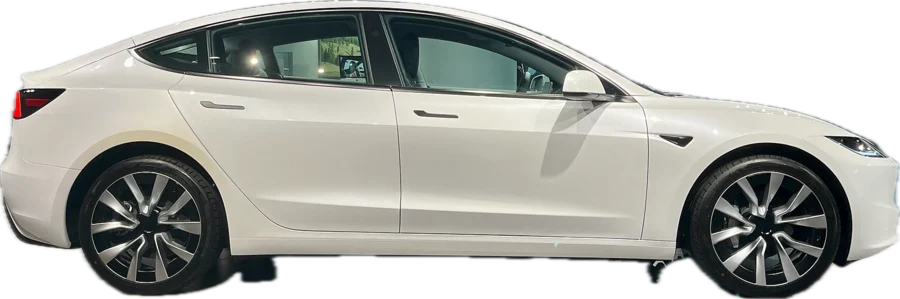
Public-domain photo used for the car in the live counter, favicon, and share image, cut out and mirrored.
,_long_range,_Japan,_left-side.jpg)